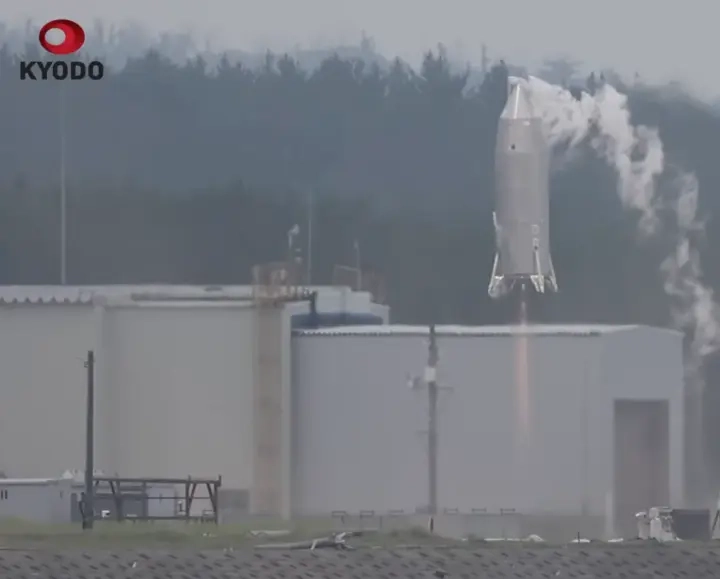
(NOSHIRO, JAPAN) – The Japan Aerospace Exploration Agency has conducted a successful first test launch and landing of a prototype reusable rocket. The flight marks progress in Japan’s efforts to develop technology that can lower the cost of space access, a field currently led by private companies such as SpaceX.
The prototype lifted off from JAXA’s test site in Noshiro, Akita Prefecture, reached an altitude of approximately 10 metres and then landed safely. The entire flight lasted about 40 seconds. Takashi Ito, who managed the launch for JAXA, told reporters that the agency had invested considerable time and effort into the project and that he felt a huge sense of relief after the prototype took off and landed without any problems.
Ito said the agency will now analyse the data to fully assess the test results, adding that he is confident very useful information has been gathered. The short hop test is an essential early step in validating the guidance, propulsion and landing systems required for a reusable rocket programme.
Most traditional rockets are designed for a single use. Their components fall into the sea, burn up in the atmosphere or remain in orbit as debris. The first stage is generally the most expensive part of a launch vehicle. Developing rockets that can return to Earth and be flown again has the potential to bring down launch costs sharply, making space more accessible for commercial, scientific and national security missions.
SpaceX has been operating its partially reusable Falcon 9 rocket since 2017 and has used the technology to capture a large share of the global launch market. China achieved its first successful landing of a reusable rocket on Friday, signalling its own ambition to compete in this segment. In June last year, a subsidiary of Honda became the first Japanese company to successfully launch and land a reusable rocket, showing that both public and private sectors in Japan are pursuing the technology.
Japan is working to strengthen the international competitiveness of its rocket industry. Its flagship H3 rocket was successfully launched in June, a positive development that came several months after a previous satellite deployment mission ended in failure. A cost effective reusable launch capability would complement the H3 programme and position Japan more favourably in the expanding global space economy.
Be First to Comment