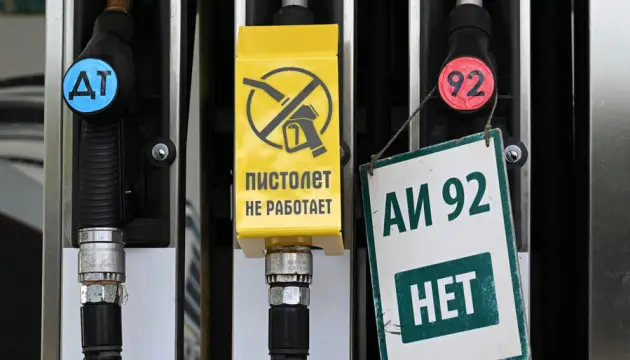
(MOSCOW, RUSSIA) – The Russian government has for the first time admitted to a petrol shortage following Ukrainian strikes on oil refineries, which have driven refining volumes down to their lowest level in more than two decades. The acknowledgement came from Deputy Prime Minister Alexander Novak and was reported by the Telegram channel ASTRA.
Novak stated that there are problems and a deficit, which have led to queues and, at times, unstable operation of filling stations. He attributed the shortage directly to the fact that Russian refineries are partially going out of service for repairs due to strikes. His remarks mark a significant shift in official messaging, as recently as 26 June the same deputy prime minister had said that there was enough fuel on the market.
The deputy prime minister also pointed to resellers who inflate petrol prices as an additional difficulty. At the same time, he assured the public that vertically integrated companies, Russia’s main producers of oil products, are keeping price rises in line with the rate of inflation. He did not provide specific figures for the scale of the deficit or the volume of refining capacity that has been knocked offline.
The impact of the strikes on Russia’s domestic fuel market has become increasingly visible. Petrol production in Russia has fallen to around 65 percent of demand, according to earlier reporting by Reuters. The loss of refining capacity has tightened supply just as seasonal demand rises, creating conditions for shortages in several regions.
Ukrainian officials have stated that their weapons can now reach all oil refineries in Russia. President Volodymyr Zelensky has described the campaign as a plan of long range sanctions, aimed at reducing Russia’s ability to fund its war effort by cutting into its energy revenues. The strikes have targeted facilities deep inside Russian territory, disrupting both fuel production and export logistics.
The broader economic consequences for Russia are mounting. Refining margins have been squeezed, domestic fuel prices are under pressure and the government faces the challenge of balancing export commitments with the need to supply its own market. Russia remains one of the world’s largest oil producers, but the loss of refining capacity limits its ability to turn crude into higher value products for both domestic use and export.
No local currency figures for petrol prices or the cost of refinery repairs were cited in the latest statement. A sustained supply shortage could push retail prices higher, adding to inflationary pressures already present in the Russian economy.
The admission of a fuel deficit by a senior government figure is likely to affect market sentiment. Traders of oil and refined products will be watching closely for any official data on refinery output and for signs of whether Russia may need to adjust its export volumes to prioritise domestic supply. The situation also carries implications for global diesel and petrol markets, where Russia has historically been a major supplier.
[…] petrol output is now covering only around 65 percent of seasonal demand, producing a 35 percent shortfall that has triggered long queues and odd even fuel rationing in […]