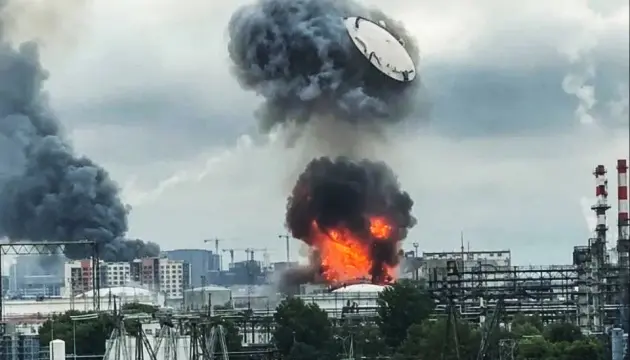
(MOSCOW, RUSSIA) – Petrol production in Russia has dropped to a level that covers only about 65 percent of peak summer demand, following a series of Ukrainian drone attacks that have forced major refineries to halt operations. The figures were reported by Reuters, citing two sources familiar with the situation.
The damage has led to the shutdown of several key plants, including the NORSI refinery and the Omsk refinery, both of which are among the largest petrol producers in the country. The Saratov refinery, another significant supplier of fuel, has also been forced to stop production, according to the sources. Together, these facilities represent a substantial share of Russia’s total refining capacity for petrol.
Current daily petrol output is now roughly 40,000 to 45,000 metric tonnes short of the country’s needs, a gap of about 35 percent. Daily petrol demand in Russia during the peak summer consumption period stands at approximately 115,000 to 120,000 tonnes. In June, the daily deficit had already reached 25 percent, but the situation has since worsened as additional refinery capacity went offline.
The widening gap between production and consumption has put pressure on the domestic fuel market. Queues have been reported at filling stations in some regions, and prices have come under strain. Russian Deputy Prime Minister Alexander Novak recently admitted for the first time that there is a petrol deficit, attributing it to refinery outages caused by strikes. He also pointed to resellers who inflate prices as a compounding factor, while insisting that major integrated oil companies are keeping price increases within the rate of inflation.
In response to the tightening supply, the Russian government has announced a ban on diesel exports starting from 8 July. The measure is intended to secure sufficient fuel for the domestic market, but it also signals the severity of the refining crisis. Russia has traditionally been one of the world’s largest exporters of diesel, and any prolonged export restrictions could have knock on effects for global fuel markets.
Kazakhstan, meanwhile, has set up more than fifty checkpoints on its border with Russia to prevent the illegal export of petrol. This step shows that the effects of Russia’s fuel shortage are being felt beyond its own borders, as neighbouring countries move to protect their own supplies from being drained by higher prices and scarcity across the frontier.
No local currency figures for petrol prices or the cost of repairing damaged refineries were included in the report.
The loss of refining capacity also affects Russia’s ability to process its crude oil into higher value products for export. While crude oil exports can continue, the reduced refining throughput limits the country’s earnings from refined products and complicates its trade balance. Market analysts will be monitoring whether the export ban on diesel extends to other products and how long it takes for damaged refineries to resume normal operations.
Be First to Comment