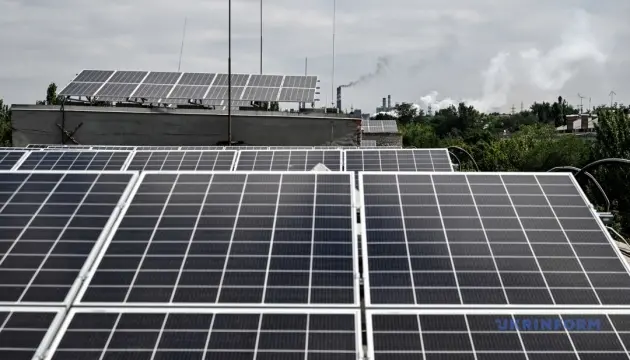
(KYIV, UKRAINE) – Ukrainian banks have financed energy recovery projects with a total generation capacity of 1.9 gigawatts over the two years since the signing of a memorandum on restoring energy infrastructure after massive Russian attacks. The figures were released by the National Bank of Ukraine, covering activity up to the start of July 2026.
According to a survey of the largest banks that signed the memorandum, the biggest share of financing has been directed towards the construction of solar power plants, gas fired installations and hydro, bio and wind energy units, as well as the purchase of generators. The range of projects reflects an effort to rebuild and diversify Ukraine’s energy mix following sustained damage to the power system.
Beyond generation, banks are also funding energy storage projects, including the creation of storage systems and the purchase of inverters and batteries, alongside the modernisation of heating equipment. The combined capacity of these storage and heating projects has reached 751 megawatts over the two year period.
In total, banks have provided more than 5,000 loans to businesses for energy projects, amounting to 52 billion Ukrainian hryvnia. A further 20,000 loans worth 4 billion hryvnia have been extended to households. At current exchange rates, 52 billion hryvnia equals approximately 1.4 billion US dollars or 1.1 billion British pounds, while 4 billion hryvnia is equivalent to roughly 108 million US dollars or 85 million British pounds.
As of early July, the gross portfolio of energy loans to businesses, accounting for repayments, stood at 34 billion hryvnia. The household portfolio amounted to 3 billion hryvnia. These figures show that demand for energy related credit remains strong, even as some loans are being repaid, and that the programme continues to support new lending.
Projects are being financed across 21 regions of the country, indicating a broad geographic spread of recovery activity. The energy memorandum was signed in June 2024 by 20 banks representing more than 85 percent of the sector’s net assets. It set a base lending rate of 13.5 percent per annum. In February 2026, the banks updated the indicative financing terms for investment projects to allow for more flexible credit products. The number of signatories has since grown to 53.
Andriy Pyshnyy, Governor of the National Bank of Ukraine, said the energy memorandum has become a strong example of effective cooperation among banks of different sizes, ownership structures and business models. He noted that supporting businesses and the wider economy, which depend heavily on a functioning energy system, became a shared goal for the banks despite high competition and their usual focus on commercial returns.
The wider investment need for new generation capacity in the coming years has been estimated at 7 billion euros, equivalent to approximately 7.6 billion US dollars or 6 billion British pounds. The banking sector’s contribution, while significant, forms part of a much larger financing requirement that also involves state funds, international financial institutions and private investors.


Be First to Comment