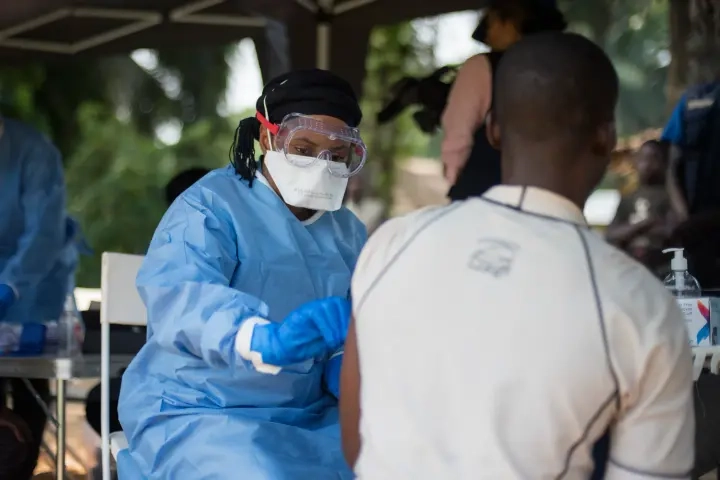
(KINSHASA, DR CONGO) – The first patients have been enrolled in a fast tracked clinical trial in the Democratic Republic of Congo, as scientists race to find an effective treatment for the Bundibugyo virus. The trial, organised in a matter of weeks, aims to test two drugs against a disease that has already caused 1,792 confirmed cases and 625 deaths since the outbreak began. No vaccine or approved medicine currently exists for this strain of the virus.
The World Health Organisation declared the outbreak a public health emergency of international concern on 17 May. Just six weeks later, researchers confirmed they had begun admitting patients to the study. This speed is being described by those involved as unprecedented for a trial of this nature. The outbreak remains in what health officials call an expansion phase, meaning case numbers are still rising.
The response on the ground still relies on basic control measures. Teams are working to find cases, isolate patients, and trace the people they have been in contact with. Around 75 percent of known contacts are being followed, but health workers face serious obstacles. Trust in authorities is low and the movement of people across the region makes monitoring difficult. This week, some frontline staff stopped work to protest against low pay, adding further strain to the effort.
The trial is centred on two treatments. One is remdesivir, an antiviral drug made by the pharmaceutical company Gilead Sciences. The other is MBP134, a monoclonal antibody developed by Mapp Biopharmaceutical. This antibody contains two specially designed immune proteins that attach to the virus and help neutralise it. Both drugs are given directly into the bloodstream. MBP134 is administered as a single infusion. Remdesivir requires a 10 day course of intravenous therapy.
Patients taking part are placed into one of three groups by random selection. One group receives remdesivir, another receives MBP134, a third receives a combination of the two drugs, and a fourth group receives only standard supportive care. The trial is open to patients of any age. Pregnant and breastfeeding women, groups often left out of medical research, are also eligible to join.
Professor Laurens Liesenborghs from the Institute of Tropical Medicine in Antwerp is working on the study in Ituri province. He said both drugs had shown strong results in animal tests against the Bundibugyo virus. The task now is to confirm whether they can reduce deaths in humans. The Bundibugyo strain generally has a lower mortality rate than the Zaire strain of Ebola, which caused most previous outbreaks, but it still kills roughly one in three people who become infected.
Supplies of the two medicines have already been secured for the initial phase. The World Health Organisation said Gilead had provided enough remdesivir, and the United States government had provided enough MBP134, to treat 1,200 patients. Talks are under way to ensure further supplies can be obtained if the drugs prove safe and effective.
A second trial is expected to start this week. That study will look at whether giving a drug called obeldesivir to people who have been in contact with confirmed patients can stop the disease from developing in the first place.
Funding remains a pressing concern. The Africa Centres for Disease Control and Prevention reported that the trial requires about 18 million US dollars in total. So far, 6 million US dollars has been made available, leaving a significant gap. Converted at current rates, the total needed is approximately 14.1 million British pounds, with 4.7 million British pounds allocated to date. In local terms, the 18 million US dollar requirement is roughly 50.6 billion Congolese francs, while the 6 million US dollars already provided equals about 16.9 billion Congolese francs.

Be First to Comment