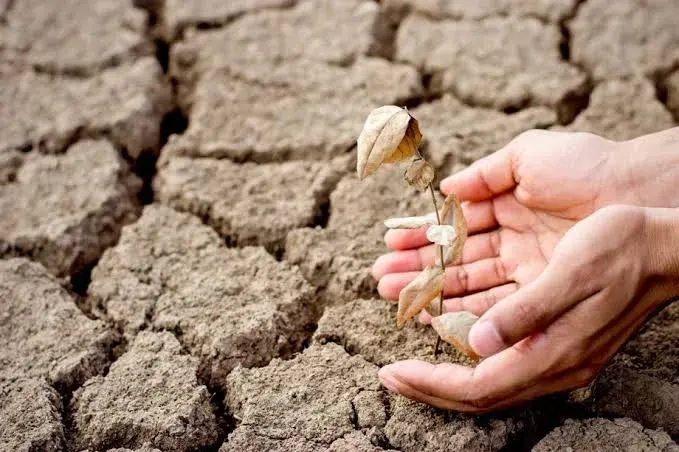
(WASHINGTON, USA) – A powerful El Niño weather cycle developing this year could trigger a global food price shock that persists until 2028, according to economists and climate analysts. The warning, reported by The Guardian, comes as global food prices have already reached their highest level in three years, driven in part by the conflict involving Iran.
Scientists say the 2026 to 2027 El Niño has a historically high chance of becoming a very strong event. The phenomenon forms when changes in wind patterns allow warmer water to spread across the central and eastern equatorial Pacific. This fuels heat waves, floods and storms across multiple continents. The US National Oceanic and Atmospheric Administration confirmed last month that warming conditions are taking hold, with a 63 percent probability that sea surface temperatures will rise more than 2 degrees Celsius above normal later this year.
Analysts at UniCredit wrote in a research note that El Niño brings climate inflation back onto the agenda. They said recent heat waves in Europe serve as a reminder that the climate baseline is already shifting, and that El Niño could add a new layer of pressure as it amplifies the effects of global warming. Households around the world are already feeling the strain of higher living costs, and a fresh inflationary shock would raise concerns among central banks that interest rates may need to remain elevated.
Goldman Sachs analysts estimate that the strength of this El Niño could push global food commodity prices up by 15.8 percent. The impact would be felt worldwide, including in Europe where food prices across the eurozone are forecast to rise by 1.3 percent. However, the full effect takes time to work through supply chains. Goldman Sachs said the consequences may only be fully realised in the second half of 2028. This delay is largely due to the different planting, growing and harvesting cycles for various crops, as well as logistical factors such as water levels in canals and rivers used for transport.
The effects are expected to be uneven. UBS analysts noted that El Niño changes global patterns of precipitation and temperature, creating regional winners and losers. Some areas may benefit from warmer conditions, but many more face disruption. Goldman Sachs reported that El Niño has already begun to affect crops, causing a drier monsoon season in India where some regions have received only 25 percent of usual rainfall. Central parts of India have received just 50 percent, with potential consequences for wheat, rice and sugarcane supplies.
In Southeast Asia, droughts could affect palm oil output, along with coffee and cocoa harvests. Warmer and wetter conditions could also increase the spread of plant diseases, damaging yields in future seasons. In North America, the strongest impact is felt in winter. Europe may experience effects largely through global food price movements rather than direct weather events.
Three years ago, the European Central Bank estimated that a strong El Niño could raise global food prices by up to 9 percent, with the biggest increases seen in soybeans, corn and rice. The way these price changes reach shop shelves depends on mitigation strategies, domestic policies, consumer demand and retailer pricing.
UniCredit has warned that the probability of an extreme El Niño scenario remains high. Such an event could lead to a 14.3 percent drop in global agricultural production, equivalent to an output loss of 342 billion US dollars. At current exchange rates, that sum equals approximately 270 billion British pounds. The bank’s report said price shocks for major commodities could range from 10 to 50 percent, while the most vulnerable crops including rice, palm oil, sugar and coffee could see price rises of 50 to 100 percent or more.
The historical record underlines the risks. The strongest El Niño on record, more than a century ago, caused catastrophic droughts in China, South Africa, Brazil, Egypt and India, triggering famines that killed millions. More recent strong events in 1981 to 1982, 1996 to 1997, 2015 to 2016 and 2023 to 2024 caused significant disruption to global food systems. Forecasters say the 2026 to 2027 cycle could be more severe than any of these.


Be First to Comment