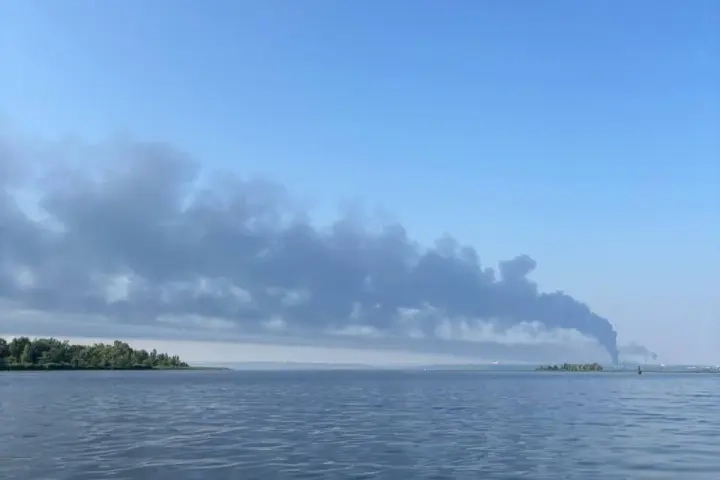
(KYIV) – Ukrainian forces have struck two Russian oil refineries and a technical observation post on a drilling rig in the Black Sea, according to the General Staff of the Armed Forces of Ukraine.
The Ilsky Oil Refinery in Krasnodar Krai and the Syzran Oil Refinery in Samara Oblast were both hit during overnight operations on 8 August. Strikes at both facilities were recorded, followed by fires on the premises, the General Staff confirmed.
The Ilsky refinery has six processing units with a total refining capacity of approximately 6.6 million tonnes of oil per year. The facility receives, stores and processes hydrocarbon feedstock, producing petroleum products used to meet the needs of the Russian armed forces.
The Syzran refinery, part of Rosneft’s oil complex, has a design capacity of approximately 8.5 million tonnes of oil per year. The facility produces more than 20 types of petroleum products, including motor fuels and road bitumen, and supplies fuel to the Russian armed forces.
In a separate operation, Ukrainian forces struck the “Syvash” self-elevating drilling rig in the Black Sea, which Russian forces had been using to deploy technical surveillance equipment. The rig housed Russian special forces personnel, surveillance systems, weapons and equipment for controlling attack drones, according to military sources.
The operation against the drilling rig involved the Ukrainian Navy, the Security Service of Ukraine (SBU) and other components of the Defence Forces, the General Staff said. Russian forces had been using the rig to interfere with GPS navigation systems and monitor civilian shipping in the Black Sea.
Dmytro Pletenchuk, spokesperson for the Ukrainian Navy, confirmed that Russian forces have periodically attempted to reoccupy such platforms after previous strikes. “You push them out the door, and they come back through the window,” Pletenchuk said during a televised briefing.
The extent of damage caused by the strikes is being clarified, the General Staff stated.
In maritime developments, Pletenchuk noted that Russian naval vessels have largely ceased operating in the open Black Sea, with three cruise missile launches recorded in July, all conducted from within port facilities. No such launches have been recorded in August to date.
“Their fear of not returning from a sortie has outweighed their willingness to risk entering the open sea,” Pletenchuk said, adding that Russian forces now prefer to launch missiles from within Sevastopol Bay rather than venturing into open waters.
Turkish authorities have reportedly restricted civilian shipping through the Bosphorus and Dardanelles straits, with vessels bound for Russian ports accumulating in the Sea of Marmara. Pletenchuk noted that Ukraine had formally warned the international community more than three years ago that the Black Sea and Kerch Strait were dangerous areas for navigation.
Ukrainian drone strikes have continued to degrade Russian military infrastructure in occupied Crimea, with operations targeting electrical substations and transformers across the peninsula. The Ukrainian Navy spokesperson stated that these strikes complicate logistical operations for occupation forces, though verified data on the impact to combat readiness remains limited.

Be First to Comment