(SAMARA, RUSSIA) – Ukrainian long range drones have struck a facility housing a Yandex data centre in the Russian city of Samara, causing widespread internet outages, in the first known attack of its kind. The operation, confirmed by Russian state media, saw the Yandex Cloud service experience power outages and go completely offline.
The strike, which occurred on 8th October, targeted the Susta machine building plant in the Samara region. While the facility produces CNC metalworking machines, it also houses a data centre operated by Yandex, Russia’s largest internet company. The attack resulted in confirmed internet connectivity issues across Russia, a fact acknowledged by the official Russian outlet TASS.
This development coincides with the conclusion of a major Ukrainian counteroffensive, reportedly named Operation Vivaldi, on the Lyman front. According to Ukrainian sources, the operation successfully disrupted a significant Russian offensive manoeuvre aimed at encircling the fortress belt of Kramatorsk and Sloviansk. The Russian plan involved a deep encirclement from the Lyman direction in the north and a southern pincer, which would have largely completed the seizure of the unoccupied Donetsk oblast.
The Ukrainian success is reported to have inflicted an operational defeat on the northern Russian pincer, forcing a likely reconstitution and rethink of Russian strategy in the area. This comes after Russian military leadership, including General Valery Gerasimov, reportedly requested another postponement of the deadline to occupy the entirety of Donetsk oblast, a date that has been repeatedly delayed.
The strike on the data centre highlights a strategic asymmetry in the digital infrastructure of the two nations. Ukraine has spent years decentralising its digital infrastructure, distributing critical systems across multiple locations and foreign cloud providers. In contrast, Russia has moved in the opposite direction, concentrating its internet behind state control, routing and filtering systems. This centralisation, while effective for political control, creates vulnerable nodes like the Yandex data centre, which are critical and hard to protect.
The data centre reportedly contained Nvidia and other Western-made chips, built well before international sanctions were imposed. Russia’s ability to rebuild or replace such facilities is severely constrained, as it cannot import these advanced components and must rely on less advanced chips from China.
In a separate incident, a Russian glide bomb attack on a civilian bus in Kramatorsk resulted in the deaths of 33 people. The weapon, a Soviet era bomb fitted with a modern guidance kit, is estimated to cost approximately $20,000, or roughly 1.85 million Russian rubles (about £15,500), to produce. Ukraine reports that Russia used nearly 9,000 such bombs in August alone. These weapons are released from 35 to 50 kilometres behind the front lines, beyond the reach of most short range air defence systems, making them difficult to intercept. The strategy is viewed as a form of terror, designed to create fear and influence political cycles in the West.
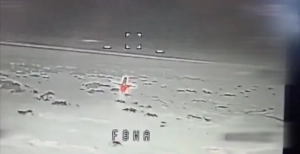
The footage of the burning data centre was released by the Ukrainian OSINT community, with satellite imagery confirming the location of the fires at the Yandex facility in Samara.
Be First to Comment