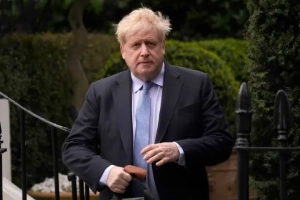
(KYIV) – A US-based research group, the Institute for the Study of War, has called on Nato to consider intercepting Russian drones in Ukrainian airspace, following a strike near the Polish border that occurred shortly after a train carrying senior European security officials and former UK Prime Minister Boris Johnson had passed through the same station.
The attack, which Nato Secretary General Mark Rutte condemned as “reckless,” has intensified debate among alliance members about whether to relax rules governing Nato operations in Ukrainian territory. Kaja Kallas, the EU foreign policy chief, said the strike was designed to intimidate Western nations. “We should show that we are there for Ukraine and we are not scared off because otherwise Russia will just achieve what they want, which is the submission of Ukraine,” she said. “Their end goal is much more. So we have to stand firm on this.”
Rutte said the strike demonstrated the Russian dictator Vladimir Putin’s desperation. “He thinks that he can stop us from supporting Ukraine and that he can undermine our unity. He is wrong,” Rutte said.
Yori Sack, a former adviser to Ukraine’s Ministry of Defence, said Kyiv had been requesting that Western partners close Ukrainian skies since February 2022, long before the current generation of jet-powered Shahed drones emerged. “For us, for Ukrainians, it makes perfect sense that whatever is in our skies and is aimed at killing our people is a rightful target for our allies,” Sack said. “But most importantly, we have to think about whether our allies have anything to intercept these drones with, because shooting them down with expensive missiles is not economically viable.”
James Landale, the BBC’s diplomatic correspondent in Kyiv, said the Institute for the Study of War is a respected, nonpartisan body whose analysis carries weight. “When it makes a policy recommendation like this, it is just another voice in the debate taking place here in Kyiv and other European capitals,” Landale said. “The argument is essentially that Russia is increasingly targeting Ukraine’s borders, particularly with Poland, and there is a case for Nato to relax its rules so that Nato forces can operate in a buffer zone just inside Ukrainian territory to bring down Russian drones before they come close to Nato borders.”
Landale noted that while some Polish politicians support the idea, other Nato members fear escalation and direct confrontation with Russia. “It is certainly a debate that’s happening here, and some people in Kyiv are definitely pushing for it, but not all Nato members would agree, and it could really push Nato to the limit,” he said.
The correspondent added that Russia is testing Nato through hybrid activities, including threats to undersea cables, cyber attacks, explosions in distribution warehouses, and assassination attempts. “There is an argument that Nato should be more proactive in pushing back and imposing costs on this behaviour,” Landale said. “But there is always the fear of escalation.”
He noted that recent Russian attacks, including a drone carrying explosives that reached Leipzig airport before failing to detonate, have prompted Western authorities to explicitly blame Russia. “There is also a debate that says Nato should push back more firmly using military force,” Landale said.
However, he cautioned that Nato operates by consensus among its 32 members, and the United States, under a president who has declared himself a peacemaker, would be cautious about direct Nato-Russia combat over Ukraine. “The counterargument is that bringing down unmanned drones a few miles over Polish territory better defends Nato, frees up Ukrainian air defences, and would put Russia back in its box,” Landale said. “If Nato doesn’t draw a red line like this, then Russia will continue pushing ever further.”
Oil Prices Spike After Houthi Attacks on Saudi Infrastructure
Oil and gas prices have risen sharply following Houthi attacks on Saudi energy infrastructure, with Brent crude trading at levels not seen since May. Damage to the Yanbu pipeline, which carries oil from the Gulf region to the Red Sea, has compounded supply concerns as the Strait of Hormuz remains closed.
Theo Leggett, the BBC’s business correspondent, said the impact extends beyond crude oil to refined products such as diesel and aviation fuel. “If the oil price goes up, the prices of motor fuels go up, the price of heating fuels goes up, and anything that needs to be manufactured and uses a lot of energy is likely to increase in price,” Leggett said. “Gas prices have also gone up, which increases electricity prices in many countries. Generally speaking, a steep increase in the oil price brings about a wave of inflation.”
Leggett noted that increased Houthi activity in the Bab-el-Mandeb Strait risks closing another export outlet, while remarks by Donald Trump that the Middle East conflict could not be resolved before the US midterm elections in November have added further pressure. “Until we see some kind of resolution in the Strait of Hormuz so that ships carrying oil and gas can get out, prices are likely to remain high,” he said. “Availability of refined goods is likely to remain scarce, and all of these things will push up prices and ultimately feed through into the price of everyday goods and foodstuffs.”
Dangote Launches Africa’s Largest Share Sale
Nigerian businessman Aliko Dangote, Africa’s richest man with an estimated net worth of around $35 billion (£27.5 billion), has launched Africa’s largest ever initial public offering for his oil refinery. The offering comprises around 4 billion shares at approximately 525 naira each, or about $0.35 (28p), and could raise $1.6 billion (£1.26 billion), valuing the company at $47 billion (£37 billion).
Simei Joloso, the BBC’s correspondent in Lagos, said Dangote wants to encourage ordinary Nigerians to buy into the company. “The big ambition here is expansion,” Joloso said. “Currently the refinery processes around 700,000 barrels of crude a day. Dangote hopes to double that to 1.4 million barrels a day and plans to spend around $14 billion (£11 billion) doing so.”
Joloso noted that while domestic refining could reduce import costs, cheaper fuel for ordinary Nigerians is not guaranteed. “There are still a lot of factors that come into how much ordinary Nigerians pay at the pump, including distribution costs, the global price of crude, and the value of the local currency,” she said.
Canada Seeks Unique Alliance with EU Amid Trade War
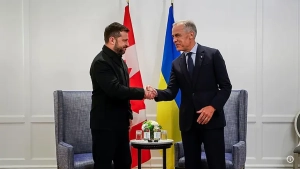
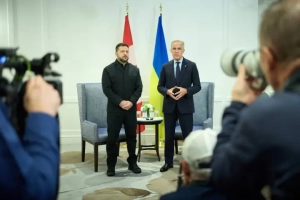
Canadian Prime Minister Mark Carney has said he wants a unique alliance with the European Union but is not seeking membership of the bloc, as the trade war with the United States intensifies. Carney said Canada and the EU share common values and interests and should work more closely together.
Mora Fogerty, the BBC’s correspondent, said the escalating trade war with the US is causing Canada to pivot strategically toward other partners. “Trade with the US is worth about $870 billion (£684 billion), while trade between Canada and the EU is much lower at about $178 billion (£140 billion),” Fogerty said. “But clearly he’s looking to diversify and deepen his allies and friends around the world because of this escalating trade war.”
Fogerty noted that the EU is rules-bound, requiring members to pay into the EU budget and follow regulations. “That’s not exactly what Mr Carney is looking for, but there are hurdles for him to developing the kinds of ties that he wants,” she said. “About nine years ago, Canada signed a trade agreement with the EU, but that deal has not been ratified by about 10 member states.”
Buckingham Palace Restoration Uncovers Historical Artefacts
Extensive restoration work at Buckingham Palace has uncovered a cluster of curious historical items beneath the floorboards, believed to belong to staff who worked at the palace decades ago. Among the finds is a ticket to an evening of playing cards or whist drives run by the Royal Household Social Club from nearly 80 years ago.
Richard Hamilton, reporting for the BBC, said other items in the unexpected time capsule include betting slips for the football pools from 1957, a pair of battered black hobnail boots, an empty Silk Cut cigarette packet, and theatre listings from the Standard newspaper in 1889. “There’s also a schedule detailing Queen Elizabeth II’s plans for a diplomatic reception in 1977, revealing that the monarch would work the room in a clockwise direction,” Hamilton said.
The items were found by workers carrying out the $500 million (£393 million) refurbishment of the palace.
The Pitt Leads Emmy Nominations
The 78th annual Emmy Awards are taking place in Los Angeles on Monday, with the medical drama The Pitt leading the nominations with 25 in total. David Willis, the BBC’s correspondent in Los Angeles, said the series has proven as popular as ER did a quarter of a century ago.
The Pitt is a gritty emergency room drama that casts an often unflattering eye on the American healthcare system. “This is a place where we have these real existential questions of what it means to live, what it means to die,” one cast member said. “People see themselves in their own lives reflected in these characters and in the stories.”
Set in Pittsburgh but made in Hollywood, The Pitt has provided an industry beleaguered by COVID and a writers’ strike with a welcome break. Another favourite, Slow Horses, has been nominated for best drama series for the third year in a row. Richard Gadd, the man behind Netflix’s Baby Reindeer, is back with a new show, Half Man, which marks a switch from stalking to toxic masculinity.

Be First to Comment